
Simply put, digital transformation for a company is like a long obstacle course. For the person in charge of this transformation, your mission (if you accept it) includes the following:
- Dealing with employee resistance to change
- Choosing software solutions that are intuitive enough to meet the specific needs of every team
- Successfully integrating these software programs into the company's processes with the aim of improving them
Among the software solution conflicts that can occur within an organisation is where we find the dilemma between ERP and CRM. On one hand, we have a global operations management tool that can appear rather cumbersome and rigid, but at the same time aspires to structure and combine the company's processes. On the other hand lies a specialised customer relationship management solution, one that makes it possible to organise commercial management, improve customer relations, provide indicators, etc.
But what if this dilemma could fade away? Why not bridge the gap between ERP and CRM? In this article, we share 5 good reasons to connect these two solutions.
Improve Data Quality
How does Data Quality Management sound to you?
As its name suggests, Data Quality Management aims to ensure that the data circulating within a company is of high quality. How is this done? By using relevant indicators that help measure quality standards.
When considering the indicators used to assess data quality, the following should be taken into account: Uniqueness (how many different forms of data exist within the IS?), Completeness (is all data recorded?), Consistency (does all data have the same value across the different data systems?).
Connecting your CRM and ERP is a major milestone in improving your organisation's data quality. Interconnecting these two software solutions boosts the circulation of data, and ultimately helps information flow more easily between the sales teams and the rest of the company.
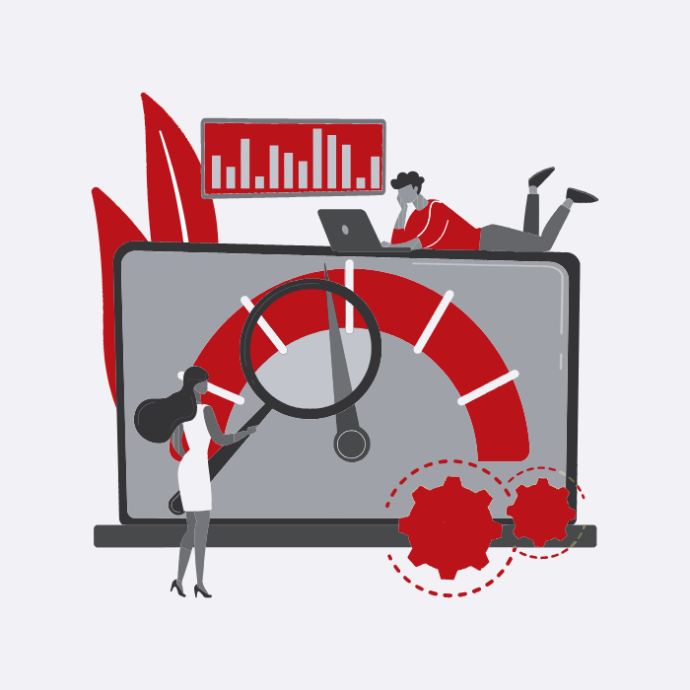
Easier information retrieval for higher productivity
"Did you check the CRM?"
These kinds of questions are common in offices when colleagues need client follow-up details. By connecting the CRM to the ERP, you ensure that all company data is available on a single interface with a consistent file structure.
Having unified data means you can easily and quickly find exactly what you are looking for. This saves you valuable time whenever you need to look up information.

Maximum visibility across all operations
To better anticipate future changes within your company, it is important to be able to take a step back and see the broader picture.
By connecting your ERP to your CRM, your ERP finally becomes the control tower for data management across the organisation – just as it should be. The ERP allows you to obtain constantly updated status reports on employee activity. Production, for example, is now just a few clicks away from knowing how many sales were made last month and making future projections. It’s up to you to take advantage of all the possibilities offered by this connection.
This connection also makes it possible to strengthen collaboration between your teams by breaking down silos within the company. Marketing, sales, finance and all other departments can now see what actions other teams are taking and better coordinate their own activities.

An integrated Sales team for improved responsiveness
How far along are we with production? What’s our stock situation? What time will the customer receive their order?
In theory, your sales team would have to ask these and many other questions to ensure a smooth and productive customer relationship. Why hold your sales team back with the limited information available in the CRM when the company already has an ERP that is readily accessible and able to provide more comprehensive data? With it, Sales can answer customer questions without having to contact an intermediary.
From logistics follow-ups to the latest price updates, thanks to the connection between these two software solutions, your sales team now has clearer visibility for better customer responsiveness – all without having to constantly switch tools.

A better-structured Information System
Netflix star Marie Kondo will tell you to get rid of anything in your home that doesn’t bring you joy. The same goes for your information system! Duplicate data doesn’t spark joy and should be treated as useless. Just throw it out!
The structure of your information system needs to be clear so you can quickly find the data you’re looking for.
Connecting your CRM to your ERP is a major step forward in organising your information system.

To find out more about all the other benefits of connecting your ERP and CRM (yes, there’s more...)
Connect your ERP and CRM!
To help you find the ideal synergy between your ERP and CRM, we’ve prepared an e-book dedicated to this topic. Inside, you’ll discover:
- Data management: which solution should be the single source of truth for data within your organisation?
- Can you do without your CRM?
- How do you convince your Sales Director and CFO to move ahead with ERP integration?
- Finding the right service provider to connect your ERP and CRM
And much more...

Captivea Odoo Gold Partner
Captivea supports companies in the implementation of Odoo business management software. Captivea is an Odoo Gold Partner and Odoo Certified.