
The WMS transforms inventory management with advanced features such as location management, route optimisation, order preparation and product traceability. These tools support accurate, efficient control of stock, cutting operational errors and maximising day-to-day productivity. The ERP, on the other hand, acts as the backbone of the business, integrating and harmonising all key functions, while the WMS concentrates on improving warehouse operations from receiving to shipping goods.
We’ll look at how WMS works, how it integrates with ERP, and why choosing the right system for your business is critical to strengthening competitiveness and logistics performance.
Understanding Warehouse Management Systems: Streamlined logistics at your fingertips
What a WMS brings to your warehouse
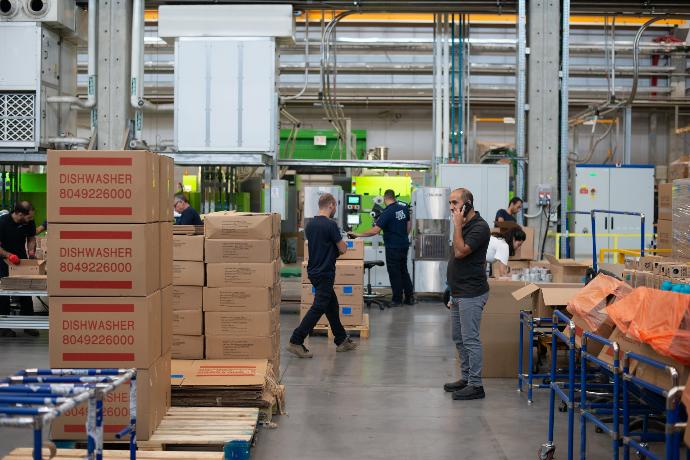
The Warehouse Management System (WMS) improves warehouse logistics operations, from goods receipt right through to shipment. It manages inventory with precision, tracking each product in detail. Advanced features such as location management and route optimisation for order picking help reduce human error and boost efficiency.
Warehouse software helps coordinate the different activities in the warehouse, making processes smoother and more orderly.
Key features of a WMS
A Warehouse Management System is a vital tool for effective warehouse management, offering the following core functions:
- Inventory Management: A WMS tracks real-time inventory levels, showing where products are located, their quantity and their condition (new, damaged, returned). This helps prevent stockouts and optimises storage space.
- Goods Receiving: When goods arrive at the warehouse, the WMS records their receipt. It verifies that the items received match the orders recorded, ensuring accurate stock management from the point of arrival and supporting efficient inventory control.
- Order Fulfilment: The Warehouse Management System organises order picking by guiding operators on where to find products and how to pack them. This reduces errors and speeds up order processing.
- Product Shipping: Once orders are ready, the warehouse software manages shipping by printing labels, planning shipments, and ensuring parcel traceability all the way to their destination.
- Returns Management: The WMS handles returns by recording returned products, updating inventory, and initiating necessary actions such as refunds or repairs, supporting effective reverse logistics management.
- Space Optimisation: Through the WMS, warehouses can maximise space by analysing optimal storage configurations and suggesting the most suitable locations for each product, improving flow and overall operations management.
- Performance Tracking: The WMS provides reports on warehouse performance, monitoring metrics such as order picking rates, inventory accuracy, and return processing times, helping identify areas for improvement and提升效率。
- Integration with Other Systems: The WMS software integrates with other systems such as ERP, TMS (Transport Management System), and e-commerce platforms, ensuring smooth and consistent management across the entire logistics chain.
Why does your business need a WMS?
A WMS plays an indispensable role for businesses facing complex challenges in stock management and logistics. By ensuring detailed, real-time product traceability, it provides complete visibility into goods movement, crucial for meeting regulatory requirements and optimising product availability in the market. This capability also enhances the ability to anticipate demand fluctuations and improve stock management tailored to market and customer needs.
Automating management processes and significantly reducing order preparation errors, the WMS software directly contributes to lowering costs associated with returns and corrections. This optimisation also enables better utilisation of available storage space, crucial for enhancing operational efficiency and the overall profitability of the business.
Understanding ERP: The comprehensive management tool
What is an ERP and why is it crucial?
An ERP (Enterprise Resource Planning) is an integrated system designed to centralise the management of all aspects of a company, from financial management to human resources and beyond. By connecting and harmonising information flows across different departments, it helps reduce data silos and enhances internal coordination.
Through this integration, ERP provides a comprehensive and coherent overview of internal operations, which is essential for optimal strategic management and well-informed decision-making.
ERPs integrate WMS modules
At the core of their comprehensive functionality, ERPs often include WMS modules to enhance warehouse and logistics management. This integration allows businesses to centralise their essential operations while incorporating warehouse management features within their ERP system.
However, it is important to note that while these integrated modules offer a streamlined, all-in-one solution for managing both business and logistics processes, they may be less specialised than standalone WMS systems. This setup simplifies day-to-day operational management for companies, providing a cohesive platform for both commercial and logistical activities.
Other ERP features
ERPs cover a wide range of functions. Some of the most common modules include:
- Financial management: tracks financial flows, accounting, and management control.
- Sales management: handles quotations, orders, and customer management.
- Procurement and purchasing: manages suppliers and inventory.
- Production management: plans and monitors manufacturing processes.
- Human resources: administers personnel and payroll management.
- Business intelligence: provides reporting and analytical dashboards.
- ...
Focus on ERP systems Odoo, Acumatica, and Cegid
Each of these ERP solutions offers features tailored to meet business requirements, supporting their digital transformation.
- Odoo: Offers a comprehensive suite of integrated modules for SMEs. It is flexible and customisable, covering various business processes from sales management to accounting, HR, and project management. Its user-friendly interface and integration capabilities make it a popular choice for transforming SME operations.
- Acumatica: Known for its advanced cloud capabilities, Acumatica is ideal for growing businesses. Its cloud platform provides enhanced accessibility, allowing users to connect to their data from anywhere. It supports complex business processes with specialised features for financial management, customer relationship management, and more.
- CegidCegid: Specializes in retail and finance, offering tools for enterprise management. Its features include point-of-sale management, accounting, and financial management. Cegid helps improve operational efficiency and gain better visibility into performance through detailed analytics and custom reports.
ERP vs WMS: Complementary solutions with distinct objectives
Where do ERP and WMS systems excel respectively?
ERP stands out for its ability to manage all company processes in an integrated manner, including finance, human resources, sales, and production. It provides a comprehensive and coherent view, enabling strategic decisions based on consolidated data.
On the other hand, WMS software excels in managing warehouse logistics operations. It optimises the flow of goods, ensures precise product traceability, and enhances supply chain efficiency.
Therefore, ERP and WMS each offer specific but complementary benefits, addressing various management needs within a company.
ERP, WMS, or ERP-WMS?
For seamless business management, choosing between an ERP, a WMS, or a combination of both largely depends on the unique needs and scale of the project. Combining an ERP with a WMS leverages their respective advantages, ensuring smooth operational coordination while maximising logistical performance.
An ERP centralises and synchronises data across all departments, providing a cohesive overview and facilitating strategic decision-making. Meanwhile, a WMS optimises stock and warehouse management processes, maximising resource use and reducing operational errors. Together, these systems create an integrated solution that not only enhances overall business management but also boosts responsiveness and competitiveness in the market.
Focus on independent WMS tools that integrate with your ERP.
These three ISV partners These three ISV partners provide customizable WMS solutions, each bringing specific features aimed at enhancing warehouse management and overall logistics performance for businesses.
- ShippingBo: Specialises in WMS solutions designed to streamline warehouse management and logistics. Their platform offers advanced features such as real-time stock management, product traceability, and automation of shipping processes. They aim to enhance organisational performance by reducing costs associated with stock management and ensuring fast, accurate order fulfilment.
- Market Invaders: Offers WMS solutions tailored to meet the needs of businesses looking to transform their warehouse management. Their software includes features such as goods flow management, storage space optimisation, and integration with other logistics and business systems. They focus on improving inventory visibility and accuracy, enabling better decision-making and operational efficiency.
- Satelix: Provides a comprehensive suite of WMS solutions to address businesses' logistics challenges. Their platform enables automated stock management, order planning, and shipment management with complete traceability. They emphasise enhancing logistics processes to reduce processing times, minimise order preparation errors, and maximise warehouse space utilisation.
Maximising your business efficiency with ERP-WMS integration
Integrating an ERP Integrating an ERP with a WMS transforms supply chain management by enhancing the synchronization of operations, from planning receipts to order fulfillment and stock optimization. This combination allows for seamless coordination of product flows, from raw material arrival to finished product shipment, ensuring efficient and responsive logistics management.These synergies are crucial for boosting business competitiveness in a dynamic and competitive economic environment, improving visibility, traceability, and operational efficiency at every stage of the supply chain.
Conclusion
A Warehouse Management System (WMS) is not only essential but truly indispensable for optimising warehouse logistics management. By centralising and proactively automating stock management, order picking and product shipping, it becomes a major lever for improving operational efficiency in businesses. This optimisation goes beyond day-to-day operations, ensuring smooth workflows, minimising errors and maximising the use of resources.
When integrated with an ERP, the WMS provides full synchronisation of processes, ensuring seamless management from the initial receipt of goods right through to their final shipment. This synergy strengthens the company’s competitiveness by improving its ability to meet market demands efficiently and accurately, while boosting overall performance at every stage of the supply chain.
Find out how to choose the solution best suited to your needs with support from Captivea
Captivea, as the leading Odoo implementation partner worldwide, is the best partner you can choose!
Don't hesitate to contact us!