
Are you looking for a solution that can meet ALL your digital transformation needs? What if ERP is THE solution for you? In this article, we will briefly explain the different roles that implementing an ERP can play in your organisation.
Pooling Processes to Optimise the Bridge Between Internal Teams and Customers
ERP is a software solution built on the idea of uniqueness: a single system in which all the information and operational services of an organisation can be found. This allows for enhanced monitoring and responsiveness in the event of a malfunction.
A modern integrated management software package (such as Odoo, for example) meets a company’s agility needs by making data access easier and radically accelerating problem identification. ERP also plays a key role in the connection between the back office and front office.
Indeed, as we have seen earlier, meeting the needs of a customer- or user-oriented operation requires smoother internal processing flows and the ability to listen to and analyse customer feedback.
Data is the key to this evolution. The central role of ERP in accessing data from different layers of the company is therefore crucial to aligning its processes with market reality.
Save time and money
More concretely, an ERP system helps a company improve its profitability. The software centralises information so that anyone in the organisation can access it when needed. This easier access provides better visibility of each other's capabilities, needs and current tasks.
Digital management of the company, enabled by an ERP system, also helps reduce the risk of errors, saves significant time by avoiding duplicate data entry, and ultimately boosts an organisation's productivity.
From converting an order payment into the right accounting and customer records, to real-time monitoring of inventory and production progress, and to customised marketing automation activities, an ERP system can streamline all of acompany's work processes.
ERP helps synchronise a company’s processes and gradually digitalises the business as a whole, enabling the adoption of best practices. Of course, the aim is not for the company to force its way of working to fit an ERP structure, which could instead make the organisation rigid, but rather to do it the other way round.
By choosing a modern, user-friendly and customisable ERP system, you will be able to take only “the good” and tailor everything else to your specific needs. Of course, to make the right choice, you’ll want a reliable partner …
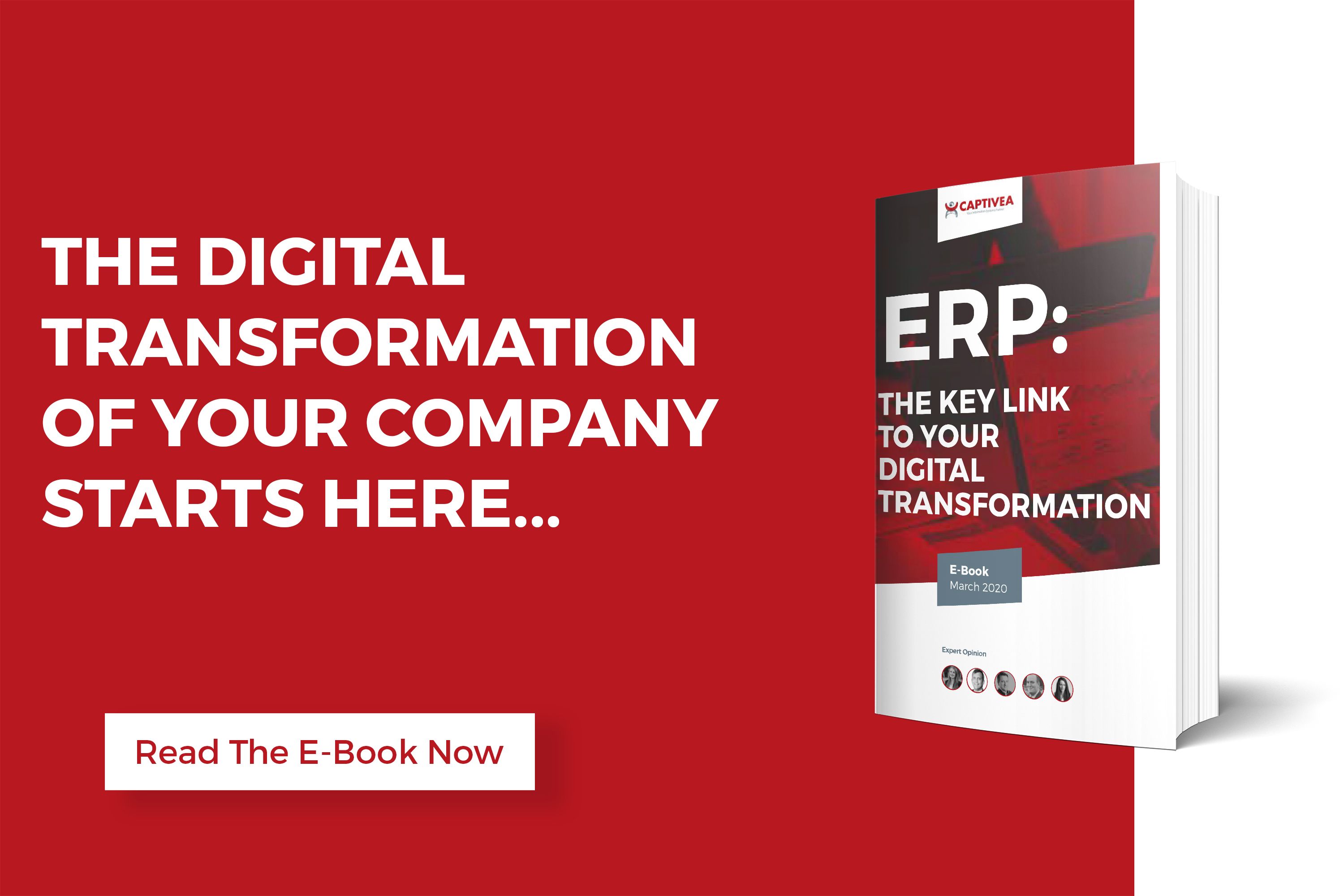
Our Guide to Your Digital Transformation!
To achieve a successful digital transformation, we are convinced that ERP is an essential software solution. In this e-book, we explain why!
- The Best Software for a Successful Digital Transformation
- Preparing Your Company for a Fast and Seamless Transition
- The Importance of ERP in Digital Transformation
- Finding the Right Service Provider for ERP Integration into Your Business
And Much More…
Ready to kick-start your company’s digital transformation with an ERP?
Join us and make your company a better place.