To everyone who thinks that CRM metrics are useless, our answer is that it’s probably because there isn’t enough awareness on the subject. So it’s high time to put an end to this urban legend and give CRM metrics a new lease on life.
Discover how CRM metrics can become the best allies of your teams’ sales performance and support your business strategy.

CRM metrics and alerts: what are they?
A CRM metric is an aggregate of mainly sales data that provides information on a situation at a given point in time. There are different types of sales metrics: quantitative, qualitative, overall, specific, business, generic and/or customized.
CRM alerts, on the other hand, are systems that can detect an “error” or an abnormal situation in the data, and therefore in reality. They help ensure good data quality.
CRM metrics: a waste of time?
This is one of the main arguments that comes up when the question of sales metrics is raised: wasting time figuring out what to enter to feed them, filling in too much information, or trying to read them easily… especially if you had the “great idea” to create a hundred of them!
In short, as you’ll have gathered, implementing sales metrics means thinking carefully about the individual and collective needs of your sales teams, but also about the necessary quality and integrity of your data.

CRM metrics: is it just about looks?
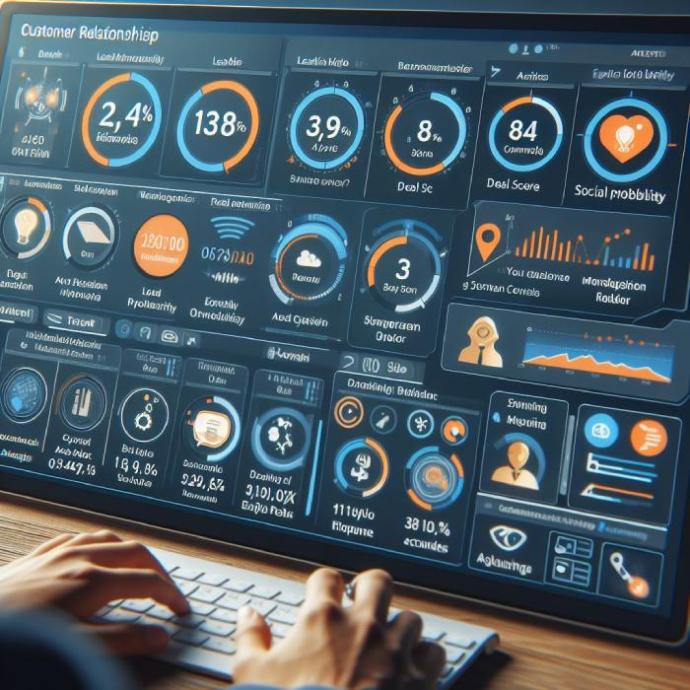
To be useful, an indicator has to be easily understood by everyone who’s supposed to read it. It’s based on a “common definition” and must be clear at a glance. But above all, it has to serve the user’s real needs, in ways that matter to them:
- of measuring results at time T,
- team supervision,
- or the broader management of sales activity and related services.
CRM indicators: are they reliable?
A KPI (Key Performance Indicator) is based on data. As a result, data that is missing or entered “on the fly” by your sales reps will distort your indicators. In this case, it’s actually better to have no indicators at all than to make strategic decisions based on information that doesn’t reflect reality.
So focus on quality rather than quantity!
CRM alerts: monitoring tools?
Yes, the whole point of an alert is to flag non-compliant data, or even report a problem up the chain of command… We could therefore conclude that it’s a control tool and see the glass as half empty… But CRM alerts are also there to make sure nothing gets forgotten. We’re not machines, we can forget to record information or actions… and thereby skew the indicators, as we mentioned above. Because oversights and mistakes are inevitable, alerts are essential.
As you can see, implementing high-performance CRM indicators is not that simple and requires serious work. But what serious sales manager could do without them? As Niels Bohr (quantum physics theorist, Nobel Prize winner in 1922) said: “What cannot be measured does not exist.”
CRM White Paper