
There are many CRM tools available on the market. This sometimes makes it difficult to find your way around. Your choice will depend on the size of your organization, your IT environment, the features that matter most to your organization, and how you plan to use them. CRMs can be grouped into two main families: dedicated CRMs and CRM modules. In this article, we’ll look at the pros and cons of each.
Dedicated CRM: The Pros and Cons
Dedicated CRMs are tools often chosen by sales management. They are more likely to be used effectively, as they are selected carefully by the sales team. Designed for salespeople by salespeople, their features are therefore advanced and well suited to sales roles. It is often possible to customize them based on how employees work, which supports adoption, buy‑in, and ongoing use of the CRM. In addition, because it is a standalone tool, it is easier to replace when it no longer meets the business’s needs. These solutions are often tailored to large enterprises.
Deploying a dedicated CRM often requires working with a systems integrator and/or your company’s IT department, so it can take some time. Deployment can also require detailed, complex specifications and can quickly become expensive. In addition, for better performance, you’ll need to equip yourself with other tools, such as an ERP or a support solution (help desk, after‑sales management, etc.). These are some points to consider before choosing a CRM.

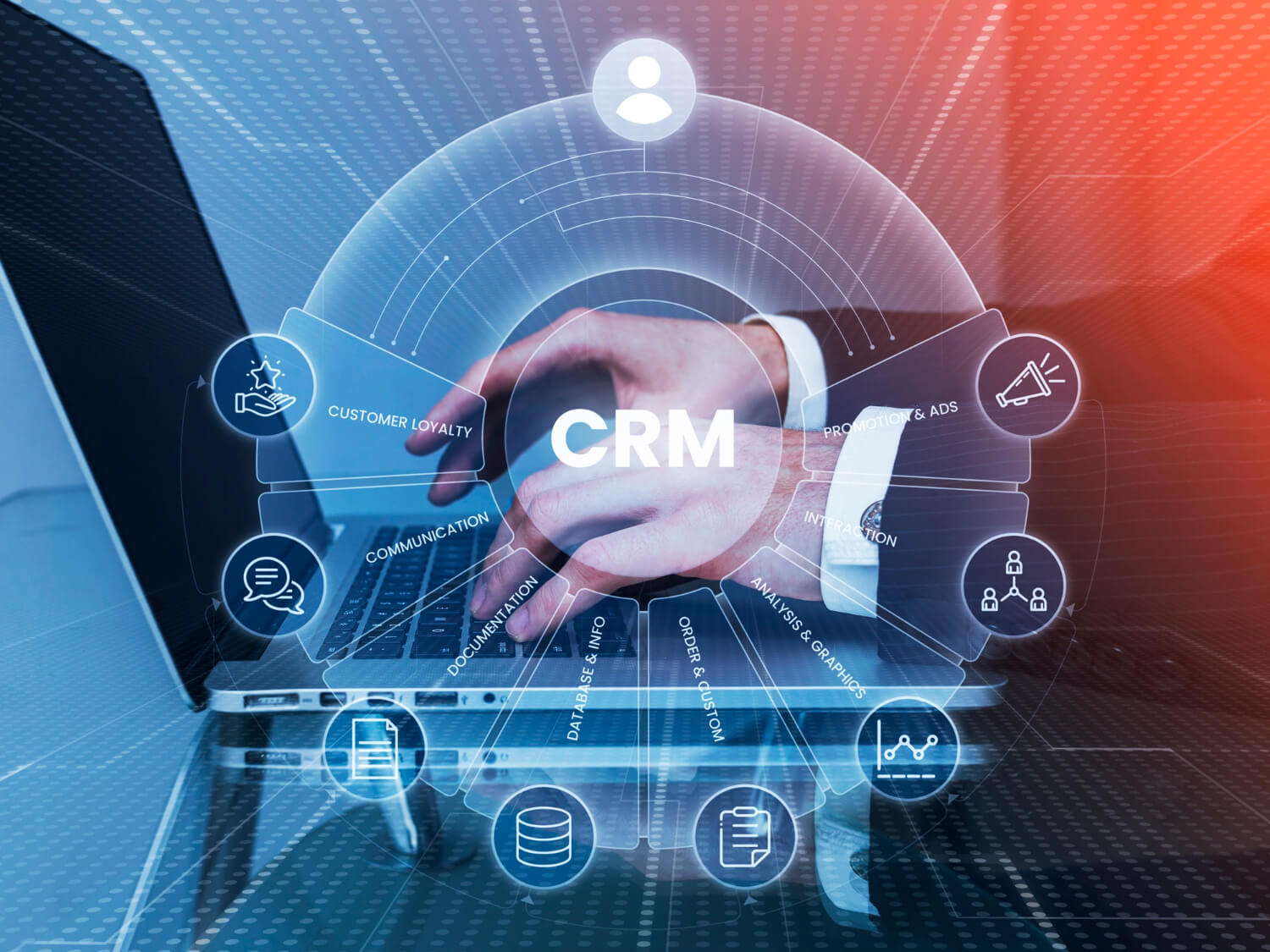
CRM Modules: Pros and Cons
You’ll also find CRM modules on the market. These are often integrated components offered within ERPs. They have several advantages. Your CRM is at the centre of the company, it’s connected to other business tools, and its comprehensive approach to the software gives you a 360° view of your customers. Easier and faster to implement, it takes your entire organization into account instead of focusing only on how your sales team will use the CRM. Another added benefit is that an ERP-integrated CRM will often be less expensive and, overall, more cost‑effective than a stand‑alone CRM system.
Some may argue that CRM modules also have their drawbacks, but when the CRM module is integrated into an ERP, the disadvantages are minimal. Today, CRM modules offer just as many, if not more, features and functionalities when compared to a stand‑alone CRM. The CRM module found in Odoo, for example, is a complete and fully functioning customer relationship management system. The sales department is not always the one that initiates the deployment of the CRM module, which makes deployment and change management easier. With software that addresses the needs of every department, there will be less resistance to change when it’s time for implementation.
Finally, a CRM module can offer a level of scalability that a dedicated CRM system can’t. With an integrated CRM, you can add more applications to your ERP system as your business needs evolve. A dedicated CRM system has limited scalability, and you run the risk of outgrowing your system faster than you can update it. Depending on your usage and your objectives, an ERP‑integrated CRM module may be the smarter and more agile option for your organization.
There’s no single ideal solution in itself. The right option depends on your objectives and priorities. At Captivea, we regularly deploy both types. Odoo can be used and viewed either as a dedicated CRM or as a CRM module integrated into a larger ERP system-the best of both worlds. The choice is yours, and our role is to take that choice and adapt the software to your specific requirements. We’ll be pleased to support you in this new project. Don’t hesitate to contact us to discuss it.

Captivea Odoo Gold Partner
We have extensive experience working with business management software such as CRM systems, and as an Odoo Gold Partner, we’re a leading choice for your next integration project.